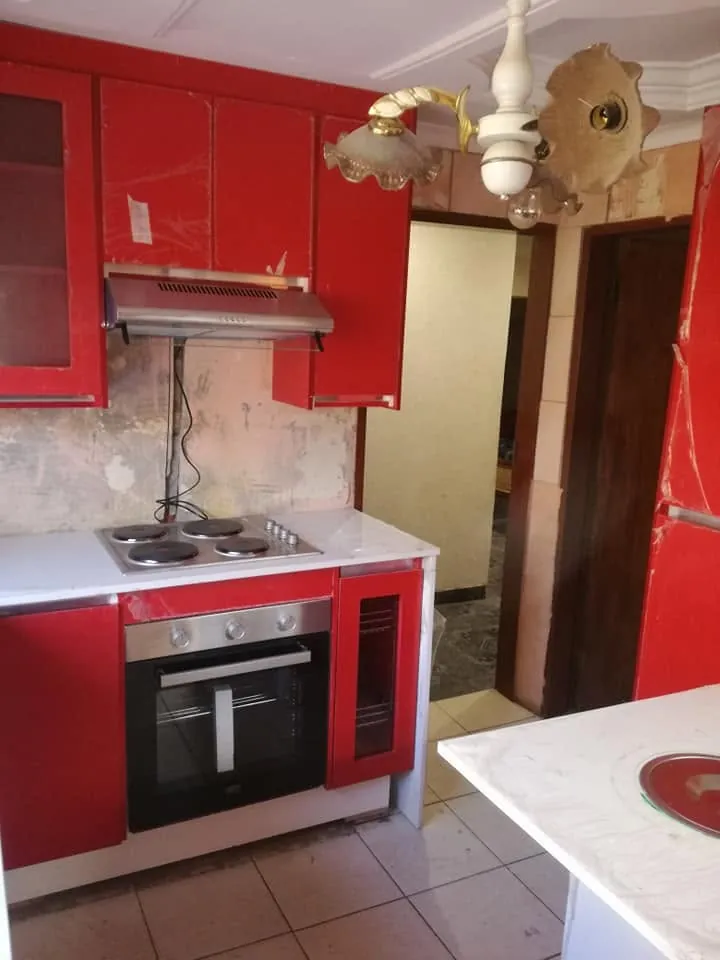
Your kitchen looks tired, but the cupboards still open and close. Do you strip the whole thing out, or put new faces on what's already there? It is the most common question we get asked on a first site visit, and the answer genuinely depends on what is behind the doors.
Here is how to tell which one your kitchen needs, what each costs in 2026, and where the break-even sits.
What each option costs
| Approach | Typical 2026 cost | What you get |
|---|---|---|
| Doors and hardware only | R1,400 – R3,500 per linear metre | New doors, new hinges and handles, existing carcasses kept |
| Full reface | R2,350 – R5,300 per linear metre | New doors, drawer fronts, end panels, kickboards and hardware |
| Full replacement | R4,700 – R14,000 per linear metre | Everything new: carcasses, doors, internals, hardware, installed |
Prices shown are estimates and starting points, not fixed quotations. The final price depends on the scope, complexity and specific requirements of each job — the size of the space, the finish and hardware you choose, the internal fittings, site conditions and access.
A firm, itemised quotation is provided free of charge once we have measured and assessed your requirements. Request a free quote and we will give you an exact figure, usually within one business day.
Indicative Gauteng ranges for 2026. Countertops are separate in all three cases. Replacement figures match our kitchen cupboard price guide.
On a typical seven-metre kitchen that is roughly R16,500 to R37,000 to reface against R33,000 to R98,000 to replace. Refacing generally lands at 40–60% of a replacement. That is a real saving — but only if the carcasses deserve to stay.
The five-minute test
Before anyone quotes you, open your cupboards and check these six things. It takes five minutes and it will tell you more than any brochure.
- Press the base of the sink unit. If it flexes, is soft, or the edge has swollen and gone lumpy, water has been getting in. This is the single most common reason a kitchen has to be replaced rather than refaced.
- Look at the shelf edges. Lifting or peeling edging on shelves and carcass sides means the board has been absorbing moisture for a while.
- Check whether shelves sag. A shelf that bows in the middle is either too thin or too long unsupported. Cosmetic work will not fix it.
- Open and close a door slowly. If the gaps are uneven and the door won't sit square even after adjustment, the carcass is out of true.
- Pull a drawer right out. Look at the runners. Roller runners on a melamine box are near the end of their useful life; metal soft-close systems are worth keeping.
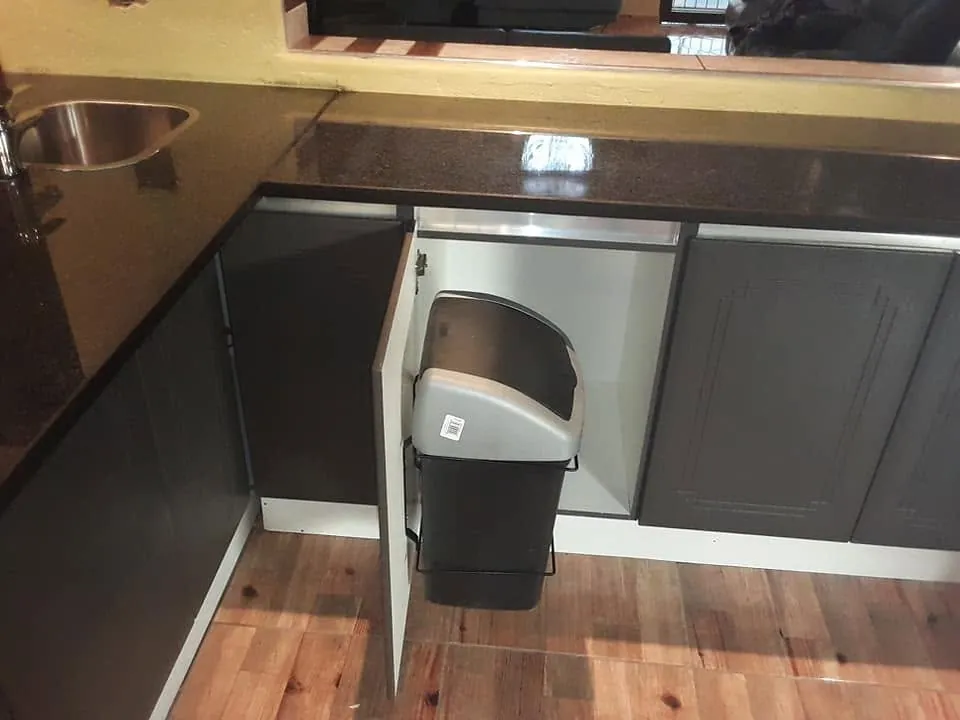
- Ask yourself if the layout works. This one is not about condition. If you have been irritated by where the bin is for four years, new doors will not fix it.
Sound carcasses, square doors, a layout you're happy with — reface. Swollen bases, sagging shelves, or a layout you have quietly hated — replace.
What a proper reface actually includes
Refacing has a reputation problem in South Africa because it is sometimes sold as "new doors" and delivered as exactly that: new doors on old, unmatched, visibly aged surroundings. A reface worth paying for covers every visible surface:
- New doors and drawer fronts in your chosen finish
- New end panels so exposed carcass sides match the doors
- New kickboards and cornices
- New hinges, runners and handles — soft-close throughout
- Any internal shelving that is tired or badly positioned
- Adjustment and alignment so every gap is even when it's done
Done that way, the result is genuinely indistinguishable from a new kitchen from the outside, because from the outside it is a new kitchen. What you kept is the boxes nobody sees.
The finish decision doesn't change
Refaced doors come in the same range as new ones — melamine, wood-grain, wrap or sprayed duco. The per-metre rate moves with the finish exactly as it does on a full build, which is covered in our finishes guide.
When replacement is the better spend
Replace, without hesitating, if any of these apply:
- Water damage. Swollen board does not come back. Building a R35,000 face onto a failing base wastes the R35,000.
- The layout is wrong. If you need a different configuration — a proper pantry, drawers instead of doors, an appliance tower, a bin that isn't under the sink — you need new carcasses. This is the most common reason to replace a kitchen that is otherwise fine.
- Non-standard sizing. Kitchens built before roughly 2000 often use dimensions that current door and hardware sizes don't fit cleanly. Fighting that costs more than starting fresh.
- You're changing the countertop anyway. If a new stone top is going on, the carcasses have to be square and level enough to carry it. That is a good moment to look hard at what you're building on.
- More than about a third needs replacing. Once you are rebuilding a third of the kitchen, the cost gap narrows and you may as well have the whole thing consistent, guaranteed and new.
The middle route most people miss
These are not the only two options. On a lot of Gauteng kitchens, the sensible answer is a hybrid: replace the units that have failed and reface the rest.
The sink run and the base units around the dishwasher take almost all the water damage in a kitchen. Wall units, tall units and the far end of a run are usually in good condition. Rebuilding the wet section properly in moisture-resistant board and refacing everything else in the same finish gives you a kitchen that looks entirely new, costs meaningfully less than a full replacement, and puts new material exactly where it was needed.
It only works if the doors match across old and new, which means the finish has to be currently available — something worth confirming before committing.
Replace or reface FAQs
Full replacement runs R4,700 to R14,000 per linear metre installed in 2026, depending on the finish. A seven-metre kitchen therefore lands between roughly R33,000 and R98,000 for cupboards alone, with countertops quoted separately. Refacing the same kitchen costs about 40–60% of that.
Replacing doors and hardware only, at roughly R1,400 to R3,500 per linear metre, is the least expensive route that still gives a real transformation. It works when carcasses are sound and square. Painting existing doors is cheaper again but rarely lasts on melamine surfaces, which do not hold paint well without proper preparation.
Press the base of the sink unit for softness or swelling, check whether shelf edges are lifting, see if shelves sag, and open a door to see whether it sits square. Water damage under the sink and out-of-square carcasses are the two findings that rule out refacing. Everything else is usually fixable.
Yes. Refaced doors are manufactured new, so any finish available on a full build is available on a reface — melamine, wood-grain, wrap or sprayed duco. The per-metre rate moves with the finish in the same way, so a high-gloss reface costs more than a melamine one.
Manufacturing time is similar — two to four weeks — because the doors and panels are made from scratch either way. Installation is where you save: a reface typically takes one to two days on site against two to five for a full replacement, and your kitchen stays usable throughout.
Often yes. A reface addresses the visual impression a buyer forms in the first ten seconds at a fraction of replacement cost. If the kitchen has structural or water problems, though, they will surface at inspection — and a cosmetic fix over a known defect is a poor position to negotiate from.
Not sure which one your kitchen needs?
We will tell you honestly. If your carcasses are sound we will say so and quote a reface, because a kitchen we build on a failing base becomes our problem too. If they are not, we will show you why on the day rather than in an invoice later.
Book a free on-site measurement and quote, explore custom kitchen units, or read what a full kitchen renovation costs in Gauteng.